
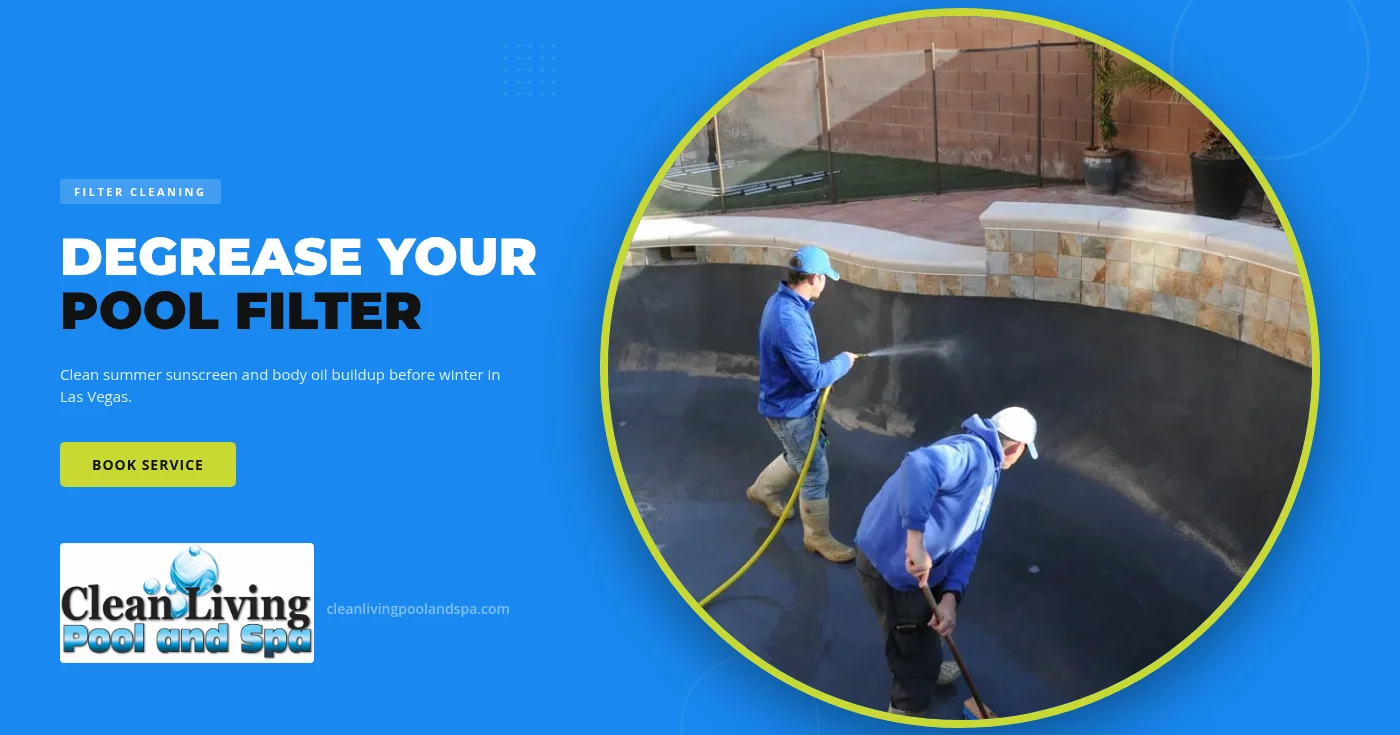
Your pool worked hard this summer. From spring through October, every swimmer carried a little sunscreen, lotion and body oil into the water, and most of it ended up in one place: your filter. That is why pool filter degreasing in Las Vegas is one of the smartest jobs to tackle as the weather cools.
Here at Clean Living, we see the same story every fall. A homeowner hoses off the cartridge, the pressure gauge barely moves, and the water still looks dull. Oils leave a film that water alone can’t lift, and our hard desert water adds mineral scale on top.
In this guide, we explain how that buildup forms, the warning signs to watch for and the right order for degreasing and descaling. We also cover how each filter type differs, when replacement makes more sense and how a clean filter helps your pump through winter.
Why a Rinsed Filter Can Still Be Clogged After a Las Vegas Swim Season
Most filter cleaning starts and ends with a garden hose. You pull the cartridge, spray between the pleats, watch the dirt and leaves wash away and reinstall it. It looks clean, and for loose debris it works. The trouble is what you can’t see.
Over a long desert swim season, the filter catches more than dust and hair. It traps a sticky film of sunscreen, tanning oil, lotion, cosmetics and natural body oils. That film clings to the fabric fibers and won’t rinse off with water, no matter how strong the spray. A hose can even push some of the residue deeper into the media. The result is a filter that looks fine but behaves like a dirty one: pressure creeps back up within days, flow drops and the water never quite sparkles.
This is why a hosed-off pool filter can still run high pressure. Water passes through fewer open pores, so the pump works harder to move the same volume. Your skimmer pulls less, your returns feel weaker and fine particles slip through. For a refresher on routine rinsing, our guide to easy steps to clean swimming pool filters covers the basics. Degreasing is the deeper step that rinsing misses, and the end of summer is when it matters most.
How Sunscreen, Lotion and Body Oil Coat Cartridge and DE Filter Media
Sunscreens are designed to stick to skin and resist water. That same staying power makes them stubborn once they reach your equipment. Most formulas contain oils, waxes and UV-blocking ingredients. When they wash off swimmers, they float to the surface, get pulled into the skimmer and land in the filter.
In a cartridge filter, the residue settles into the polyester pleats. Each pleat is a dense web of fibers with tiny openings, and oil coats those fibers like a thin layer of wax. Dirt then sticks to the oil, building a crust that narrows the openings further. After a summer of pool parties and long afternoons, a greasy pool filter cartridge that feels slick or tacky to the touch is a very common find.
DE filters face the same problem in a different form. The diatomaceous earth powder coats fabric grids and does the fine filtering, but oils bind the powder into clumps and smear across the grid fabric. Backwashing removes much of the spent DE, yet oily patches stay stuck to the grids and keep blocking flow when fresh powder goes in.
Chlorine breaks down some organic material, but it can’t keep up with a steady supply of lotion all season. That’s why sunscreen oil in a pool filter usually needs a dedicated degreaser to lift it out.
Warning Signs: Pressure Gauge Readings, Short Cycles and Cloudy Water in November
Your filter usually tells you when it needs attention. You just have to know where to look, starting with the pressure gauge on top of the tank.
Pressure that stays high
Note the reading right after a thorough cleaning; that’s your clean or “starting” pressure. A common rule of thumb is to clean when the gauge reads about 8–10 psi above that number, though the exact figure varies by manufacturer, so check your owner’s manual. If a rinse drops the pressure only a little, or it jumps back within a few days, oil buildup is a likely culprit.
Short filter cycles
A healthy filter should go weeks between cleanings. If you’re hosing it off far more often than you used to, the media isn’t releasing what it catches.
Cloudy or dull water
November here typically brings daytime highs in the 60s and cool nights, based on normals from the National Weather Service. Fewer people swim, so chemical demand should ease. If your water still looks hazy with balanced chemistry, the filter may not be trapping fine particles. Other clues include a greasy ring at the waterline, weak return jets and a skimmer that struggles to pull debris.
Degreasing First, Then Descaling: Handling Oils and Hard-Water Scale in the Right Order
Filters in our valley usually carry two kinds of buildup at once: oils from swimmers and calcium scale from hard water. Southern Nevada Water Authority figures have put local hardness at roughly 280–300 mg/L, or about 16–18 grains per gallon, though it’s worth checking SNWA’s current water quality data. As summer heat evaporates water and you top off the pool, minerals concentrate and scale forms on the media.
Order matters. Industry guidance widely recommends degreasing first and descaling second. An acid soak on an oily cartridge can set the oils into the fibers, making them even harder to remove. So when people weigh a cartridge filter degreaser vs an acid soak for hard water, the answer is usually both, in that sequence:
- Rinse loose debris from the filter.
- Soak it in a dedicated filter degreaser, often overnight, following the label.
- Rinse thoroughly until no foam or residue remains.
- If scale is present, use a mild acid soak made for filter media.
- Rinse again and reinstall.
Never mix cleaners, and rinse completely between steps. Wear gloves and eye protection, and always add acid to water, never water to acid. Skip household dish soap, which leaves foam behind. Here at Clean Living, we handle both steps with products matched to your filter.
Cartridge vs. DE vs. Sand: How the Degreasing Process Differs by Filter Type
Every filter type collects oil, but the cleaning process looks different for each one.
Cartridge filters
Cartridges are the most common filters we see on residential pools. We remove each element, rinse it, soak it in degreaser, rinse again and descale if needed. If you’re wondering how to remove sunscreen buildup from a pool filter cartridge, the overnight soak is the key step, giving the cleaner time to break down oils deep in the pleats. Multi-cartridge systems should have every element cleaned together so flow stays even.
DE filters
DE filter cleaning goes beyond backwashing. At least once a year, the tank should be opened and the grids removed, soaked in degreaser and inspected. Torn grids need replacing, since they let powder pass into the pool. After reassembly, the filter is recharged with the amount of DE listed on its label. Spent DE shouldn’t go into storm drains, so follow current local stormwater guidance for disposal.
Sand filters
Sand filters rely on backwashing, but oily sand clumps together. Water then channels around the clumps instead of filtering through them. A sand-filter cleaner can break up the oils, and sand typically lasts around five to seven years before it needs replacing.
When a Filter Is Too Worn to Save and Needs Replacement
Degreasing can restore a lot of performance, but filter media doesn’t last forever. A common guideline is that cartridges last one to three years, or roughly three to five deep cleanings, depending on use and water chemistry. That’s convention rather than a hard rule, so we judge by the filter itself.
Signs a cartridge is past saving include:
- Frayed, torn or flattened pleats
- Cracked or separated end caps
- A collapsed or bent center core
- Short filter cycles even right after a full degreasing
- Fabric that feels brittle after cleaning
For DE filters, we check grids for tears, worn fabric and broken frames. For sand, clumping that persists after chemical cleaning, or sand near the end of its typical lifespan, points toward a change.
Replacing a worn filter isn’t only about clarity. A failing filter makes your pump strain against higher pressure, which can shorten the life of the pump and motor. If we spot cracked housings, leaking O-rings or a faulty gauge, our pool repair services can address them before they grow. For more on timing and choosing media, read our guide to pool filter replacement.
How a Clean Filter Supports Shorter Winter Pump Run Times
Pools here don’t close for winter; they keep running through the cooler months. With colder water and fewer swimmers, algae growth slows and many owners shorten pump schedules to save energy. The right number of hours depends on your pool size and equipment, so it’s worth reviewing with a professional.
A clean filter is what makes shorter run times work. When media is clogged with oil, each hour of pumping moves less water, so a reduced schedule may not turn the pool over enough to keep it clear. A freshly degreased filter moves more water per hour, letting you trim run time while keeping circulation and sanitizer distribution on track.
That’s why end of season pool filter cleaning is such good timing. You clear out a summer of residue, reset your starting pressure and head into winter with equipment at its best, easing strain on the pump and motor.
One caution: freezes are uncommon here but do happen, mostly in December and January. Don’t leave a filter apart overnight when a freeze is forecast. Our guide on how to winterize your pool covers more cold-weather steps, and our pool cleaning services keep water clear through the quiet season.
Frequently Asked Questions About Pool Filter Degreasing in Las Vegas
Can I use dish soap to degrease my pool filter?
We don’t recommend it. Dish soap isn’t designed for filter media and tends to leave foam and residue that ends up in your pool. A cleaner made for cartridges or DE grids breaks down oils and rinses out more completely.
Should I degrease my pool filter in November in Las Vegas?
Yes, November is an ideal time. The heavy swim season is over, months of sunscreen oil are still in the media, and cooler weather makes it easy to take the filter offline for an overnight soak. Just avoid leaving it apart when a freeze is in the forecast.
How often should I deep-clean my filter?
For pool filter cleaning in Las Vegas, most pools benefit from a full degreasing at least once a year, with the end of summer being the most important time. Heavily used pools may need it more often. Let your pressure gauge guide you in between.
Does hard water damage pool filters?
Not overnight, but calcium scale gradually clogs the media and can leave fabric stiff and brittle. Degreasing followed by descaling, plus balanced water chemistry, helps your filter last longer.
Schedule Pool Filter Degreasing in Las Vegas Before Winter
A summer of sunscreen and body oil doesn’t rinse away with a hose. Pool filter degreasing in Las Vegas clears that hidden film, removes hard-water scale in the right order and sets your equipment up for clearer water and easier winter run times. Here at Clean Living, owners John and Julie Butler have helped local pool owners since 2012, serving Las Vegas, North Las Vegas, Summerlin and Centennial Hills. Whether you need a one-time end-of-season cleaning or ongoing pool maintenance, we’re ready to help. Contact Clean Living to schedule your filter cleaning today.
How Do I Know If My Pool Filter Needs a Professional Degreasing?
If your pressure gauge stays high after a rinse, your filter cycles keep getting shorter or your water looks dull even with balanced chemistry, a summer of sunscreen and body oil is likely coating your filter media. We see it every fall, and a garden hose simply can’t lift that film.
Here’s what our end-of-season filter service includes:
- Full teardown and inspection of cartridge, DE or sand filters, including end caps, cores, grids and O-rings
- Dedicated degreasing to break down sunscreen, lotion and body oil buildup deep in the media
- Descaling in the right order to handle hard-water calcium after the oils are gone
- DE recharge with the correct amount listed on your filter’s label
- An honest replacement check so you know when cleaning will help and when new media makes more sense
A clean filter moves more water per hour, which helps your pool stay clear on a shorter winter pump schedule and eases strain on your pump and motor. If we find worn parts, we can handle repairs and replacements too.
We’ve been caring for pools since 2012 across Las Vegas, North Las Vegas, Summerlin and Centennial Hills, with weekly service, filter cleaning and equipment repair all under one roof. Want the full breakdown? Read our complete guide to end-of-season pool filter degreasing to learn how buildup forms and how each filter type is cleaned.