
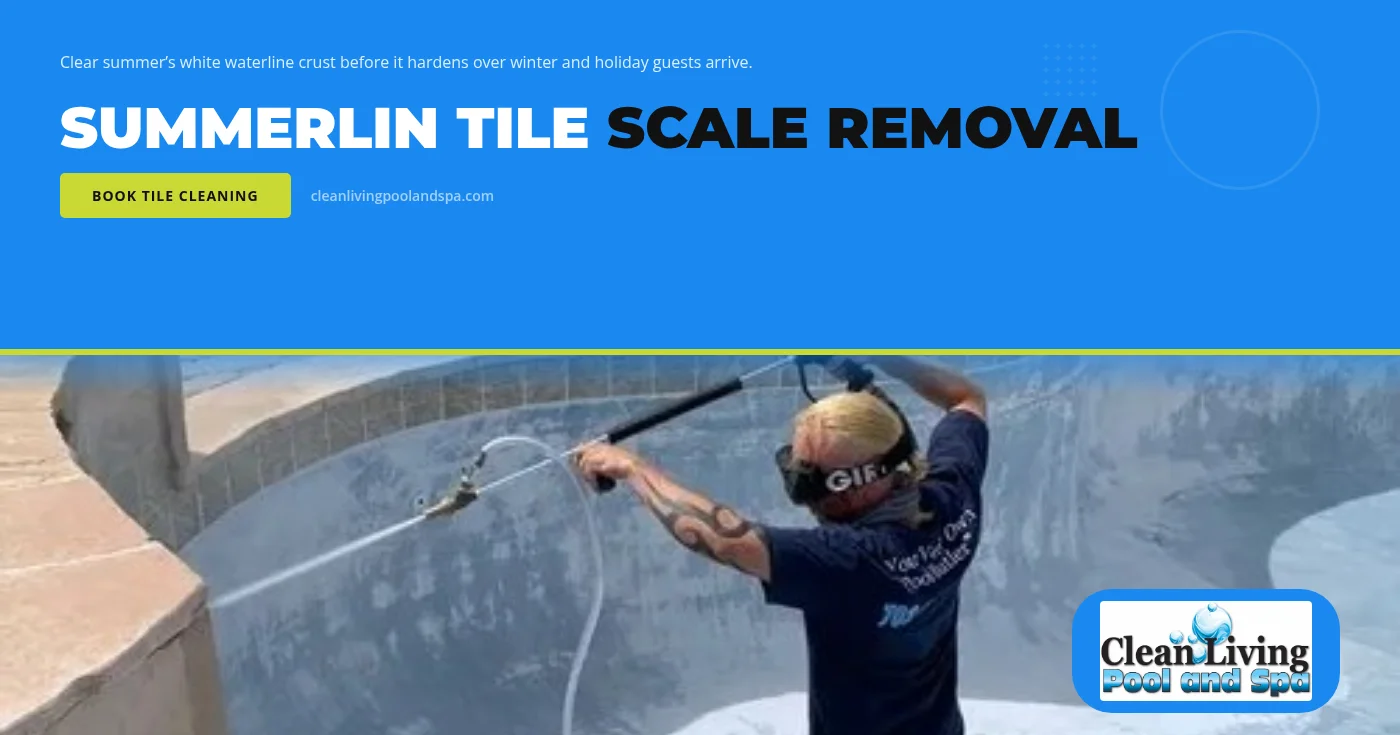
By the time the last pool party of summer winds down, a lot of backyards share the same souvenir: a chalky white band running along the tile right at the waterline. It shows up on glass mosaics, on glazed ceramic borders and even along the edge of the coping. That crust is calcium scale, and it’s the reason so many homeowners start looking for pool tile cleaning in Summerlin once the heat finally breaks.
The cause is simple, even if the fix takes some care. Our valley’s water is hard, summer evaporation is relentless, and every top-off adds another dose of dissolved minerals that has nowhere to go except onto your tile. Left alone through the cooler months, that scale keeps curing and gets harder to remove by spring.
Here at Clean Living, we’ve been looking after pools across the Las Vegas Valley since 2012, and fall pool tile cleaning is one of the most satisfying jobs we do. In this post, we’ll explain where the white crust comes from, how to tell the two main types of scale apart, why November is such a practical month for waterline scale removal, how professionals clean tile without scratching it, and how to balance your water so the buildup doesn’t come right back.
Why Summerlin Pools End Summer With a White Crust at the Waterline
Most of the valley’s tap water comes from Lake Mead and the Colorado River, and it carries a lot of dissolved calcium and magnesium. Hardness is commonly cited at roughly 270–300 milligrams per liter, or about 16–18 grains per gallon, though the exact figure shifts over time. The Las Vegas Valley Water District’s website is the best place to check current numbers. By any measure, that’s very hard water.
Hard water alone wouldn’t be a big problem if it stayed put. The trouble is evaporation. In midsummer, desert pools can lose a quarter inch or more of water a day. That’s a common industry estimate, and your pool may run higher or lower depending on wind, shade and whether you use a cover. When water evaporates, the minerals stay behind. Then the autofill or garden hose tops the pool back up with more hard water, and the cycle repeats all season long.
The waterline takes the brunt of it. Tile there is constantly splashed, dried by the sun and splashed again, and each wet-dry cycle leaves a thin film of minerals. Over a summer, those films stack into the crusty band you’re looking at now. The western side of the valley sits a bit higher than the valley floor and runs a few degrees cooler, but strong sun, low humidity and afternoon breezes still drive plenty of evaporation from May through September.
Calcium Carbonate vs. Calcium Silicate: Identifying the Scale on Your Tile
Not all calcium buildup on pool tile is the same, and the type you have decides how it should come off. Pool professionals generally sort waterline scale into two categories.
Calcium Carbonate: White, Flaky and Fizzy
Calcium carbonate is the most common culprit. It’s bright white, a little chalky, and often flakes or crumbles when you scrape it with a fingernail. It’s also usually the newer layer — the scale that formed this past summer. A quick home test: put a few drops of white vinegar on the deposit. If it fizzes or bubbles, you’re most likely looking at carbonate scale, which responds well to the right descaler and careful scrubbing.
Calcium Silicate: Gray, Glassy and Stubborn
Calcium silicate is tougher. It tends to look grayish-white, feels hard and almost glassy, and won’t fizz under vinegar. Silicate usually builds up over several seasons, often underneath a carbonate layer, and it bonds tightly to the tile surface. Because it doesn’t dissolve easily, it typically calls for media blasting or, on glazed ceramic only, very careful work with a pumice stone.
Many older pools have both: a fresh carbonate crust sitting on top of years of silicate. That’s why a quick scrub can make tile look better without truly getting it clean, and why the right diagnosis matters before anyone starts scraping.
Why November Is a Smart Time for Pool Tile Cleaning in Summerlin
Plenty of homeowners think about their tile in June, when they’re in the pool every day. Cleaning it in late fall usually makes more sense, for several reasons:
- Pool use is low. With daytime highs typically in the 60s and nights dipping into the 40s, few people are swimming, so a day of tile work barely interrupts anything.
- The waterline holds steady. Evaporation drops sharply compared with June through August, so the level doesn’t fall away mid-job and new deposits form much more slowly.
- Cooler water is easier to work with. Water temperatures usually slide into the 50s or low 60s. If a partial drain and refill is part of the plan, cooler weather is gentler on plaster than refilling under a blazing summer sun.
- Scale doesn’t get a winter to cure. Deposits left on tile through the off-season keep hardening. Removing them now means less work and less wear on your tile later.
- The holidays are coming. From Thanksgiving through New Year’s, backyards fill up with guests. A bright, clean waterline makes the whole yard look cared for, even if nobody’s swimming.
It’s also a good moment to plan for the season ahead. A pool cover cuts winter evaporation and the number of top-offs you’ll need, which means less new calcium heading for your freshly cleaned tile.
How Professionals Remove Calcium Without Scratching Glass or Glazed Tile
The goal of pool tile calcium removal is to take the mineral off without taking the tile’s finish with it. Glass tile and glazed ceramic look tough, but both can be scratched or dulled by the wrong tool or chemical. Here at Clean Living, we start every tile job by figuring out exactly what we’re dealing with.
Start With the Right Diagnosis
We check the tile type, test a small area of the scale and look at your water chemistry. Carbonate on glazed tile is a very different job from silicate on glass mosaic, and the approach should match.
Targeted Descalers and Hand Work for Carbonate Scale
Fresh carbonate scale often comes off with a pool-appropriate descaling product applied in small sections and worked with nylon brushes and plastic scrapers. Acid-based removers are effective, but they need careful application and should be kept off grout and plaster as much as possible. Pumice stones can help on glazed ceramic, but they should never touch glass tile — they leave fine scratches that catch even more scale later.
Media Blasting for Heavy or Silicate Scale
For thick or silicate buildup, the industry standard is media blasting with soft materials such as fine glass beads or sodium bicarbonate. The water level is lowered a few inches, and the media is directed at the tile at controlled pressure to break up the scale without gouging the glaze. It’s a specialized job, and if your tile needs it, we’ll explain what’s involved and talk through your options.
Balancing Water Chemistry So Scale Doesn’t Return Over Winter
Clean tile only stays clean if the water stops depositing new minerals. Pool professionals use the Langelier Saturation Index (LSI) to predict that. It combines pH, total alkalinity, calcium hardness, water temperature, total dissolved solids and cyanuric acid into one number. A positive LSI means the water tends to leave scale; a negative one means it tends to etch surfaces. Most pros aim for roughly −0.3 to +0.3.
Typical targets look like this, though your pool’s surface and equipment may call for adjustments:
- Calcium hardness: about 200–400 ppm for plaster pools
- pH: 7.2–7.8
- Total alkalinity: 80–120 ppm
Temperature matters more than people expect. Cooler water lowers the LSI, so scale forms more slowly in winter, but water balanced for summer can drift toward the corrosive side. Regular testing through our pool maintenance service keeps those adjustments small and steady.
A few habits help, too: brushing the waterline regularly, using a scale-control sequestrant in hard water and keeping a cover on to reduce evaporation. Eventually, though, calcium and dissolved solids climb high enough that the practical fix is a partial drain and refill. Drain water generally has to go to the sewer cleanout rather than the street, so check current guidance from the Southern Nevada Water Authority before you drain. If you’re unsure whether your pool has reached that point, our pool consulting service can help you decide.
DIY Tile Scrubbing Risks and When to Call a Pro
We understand the urge to grab a brush on a nice fall afternoon. Light, fresh carbonate film can sometimes be handled with a soft brush and a pool-specific tile cleaner. But hard water pool tile stains often turn out to be more stubborn than they look, and a few common shortcuts cause real damage:
- Pumice on glass tile. It scratches the surface permanently, leaving a dull, hazy finish.
- Wire brushes and metal scrapers. They can chip glaze and leave rust marks behind.
- Undiluted or overused acid. Strong acids can etch grout and plaster, throw off your water balance, and irritate skin, eyes and lungs without proper protection.
- Household cleaners. Products made for showers and faucets aren’t formulated for pool water and can disrupt your chemistry.
It’s time to call a professional if the scale doesn’t fizz with vinegar, if your waterline is glass tile, if the buildup runs around the whole pool, or if it returns within a few weeks of scrubbing. Fast regrowth is usually a water chemistry issue rather than a cleaning issue, and it deserves a closer look.
Frequently Asked Questions About Pool Tile Calcium Removal in Summerlin
What is the white crust on my pool tile?
It’s almost always calcium scale — minerals left behind as hard water evaporates. Most fresh crust is calcium carbonate, while older, grayer and harder deposits are often calcium silicate.
Do I need to drain my pool to clean the tile?
Usually not completely. For most tile work, the water level only needs to drop a few inches to expose the scale line. A partial drain is a separate decision based on your calcium hardness and dissolved solids.
How often should Summerlin pools be partially drained?
A common rule of thumb is every two to three years, but it really depends on your test results, how often you top off and whether you use a cover. Testing calcium hardness and TDS regularly tells you when it’s time.
Will calcium scale come back over winter?
It forms more slowly in cooler water, but it can still creep back if your chemistry runs high. Balanced water, a cover and routine brushing go a long way toward keeping the waterline clear until spring.
Book Pool Tile Cleaning in Summerlin Before the Holidays
That white band at the waterline is a summer souvenir you don’t have to keep. Scale removed in November comes off more easily than scale that’s had all winter to harden, and a clean waterline gets your backyard ready for guests from Thanksgiving through New Year’s. Pool tile cleaning in Summerlin is a small project with a big visual payoff, especially when it’s paired with water chemistry that keeps the scale from returning.
Here at Clean Living, we’ve cared for pools since 2012 across Las Vegas, North Las Vegas, Centennial Hills and Summerlin. Whether you need a one-time tile cleaning or ongoing care, reach out to our team to schedule your fall tile service, and we’ll have your waterline looking sharp before the season’s first guests arrive.
Who can clean the calcium off my pool tile and keep it from coming back?
Calcium scale is one of the most common things we see on pools in our corner of the desert, and it’s rarely just a cleaning problem. Here at Clean Living, we look at the tile, the water and the equipment together so your waterline stays bright long after we pack up.
- Tile cleaning: We remove calcium buildup with gentle, tile-appropriate methods and let you know up front if heavier scale needs a different approach.
- Water analysis & chemical treatment: We test calcium hardness, pH, alkalinity and more, then balance the water so new scale forms as slowly as possible.
- Weekly pool service: Our pool cleaning visits include brushing, vacuuming and emptying skimmer and pump baskets, so mineral film never gets a head start.
- Filter cleaning and equipment inspection: A clean filter and a healthy pump keep water circulating properly, which helps your chemistry stay stable.
- Acid wash and repairs: When surfaces or equipment need more than routine care, we handle acid washes, pump and motor repair and replacement, and other pool repair services.
Since 2012, John and Julie Butler and our team have helped homeowners and property managers across Las Vegas, North Las Vegas and Centennial Hills keep their pools clean and inviting. If your waterline is looking chalky this fall, get in touch with us and we’ll take a look.